Written by Jonny Bird
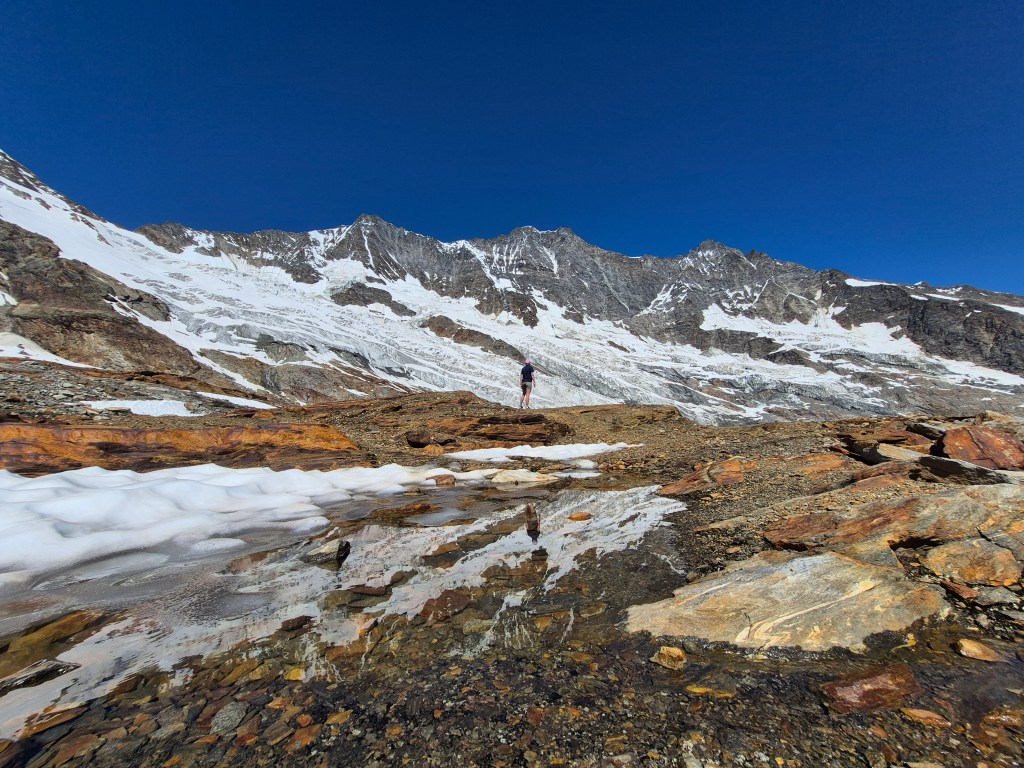
At 14 years old, I stood on the summit of Aguille Croche – a minor summit across from the Mont Blanc Massif – staring across at twisting glaciers, sharp ridges and snow capped peaks. This view was enough to stir something within, watching a few tiny figures ascending the slopes above the Dôme du Goûter, I distinctly remember promising myself that one day I would be ‘up there’ too. On reflection, I had no idea what being ‘up there’ would entail – but in the 15 years since, I have been slowly finding out.
Alpinist, noun – a climber of high mountains, especially in the Alps.
It can be a daunting proposition for a UK mountaineer – taking your skills and experience to the greater ranges. What about the altitude? The weather? Crevasses and avalanche danger? Add into this the incredibly bright clothing using worn by alpine climbers, it is no wonder that people can be put off! I am pretty sure that I will always consider myself an ‘alpinist in training’, but over the last 15 years I have been fortunate to gather some valuable hints and tips for helping climbers get started on their alpine journey.
UK experience does count – honest!
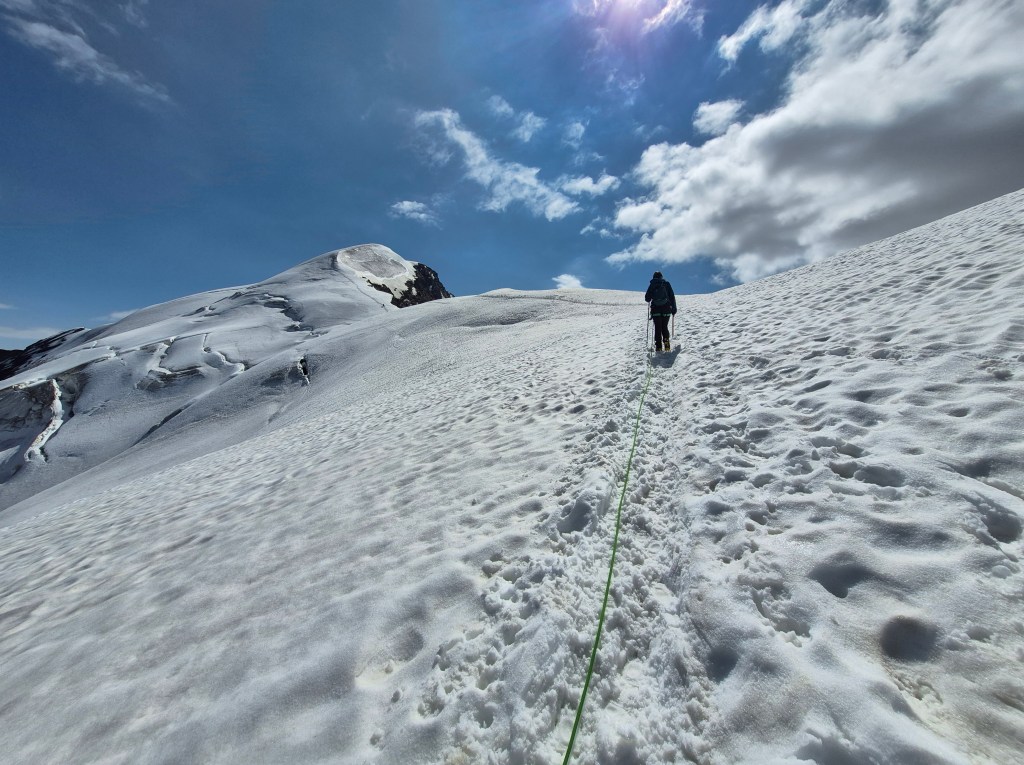
A very common question when venturing into the Alps for the first time is whether experience climbing and hiking in the UK will actually help? The simple answer is: yes.
While there are some obvious differences with days Alpine terrain, there are loads of things that can be practiced, and skills that can be gained while still at home. It is, therefore, no surprise that many guided trips offer ‘Alpine preparation courses’ in the UK before clients fly to translate these skills to larger peaks. Over the years, a few things have really stood out to me as great preparation for your first alpine trip:
- Scottish winter days – as much time moving in crampons, using an ice axe and learning to transition between angle of slope. Scottish winter is also a great environment to learn how to minimise faffing while often battling tricky conditions!
- Efficient mountain movement – practice moving at a consistent pace all day, minimising stops, being efficient with changeovers, navigation and communicating well as a team. Being intentional about this, and practicing before a trip can massively improve your ability to climb routes and get down before conditions worsen/to catch the last lift of the day!
- Prepare for rock climbs with intentionality – if your goals are more rock climbing oriented, practice moving in the way you intend to. Whether this be efficient pitched climbing, moving together along an alpine ridge and slick abseils. Saving time at belays, or having the ability to run pitches together as a team will vastly improve your ability to move. Don’t save this for when you are out there!
- Crevasse rescue techniques – hang on a second – we don’t have crevasses in the UK?! Right you are – but that doesn’t stop the chance to get some practice in. We have practiced crevasse rescue and emergency hauling on a campsite using van wheels as anchors. Maybe some imagination is required, but being slick with this before venturing out onto the glacier is a key safety measure.
- Understanding your kit – one of the ways to minimise time lost on an alpine day is knowing your kit inside out. What layers should I wear? How to I like to rack my nuts? How much water do I drink? How fast can I put my crampons on? These are all questions that can be sussed out before going.
- Getting fit (in the right way) – as with a lot of the above, replicating the alpine environment from the UK can go a long way to helping bridge the gap. And it is no different with fitness – training in a specific, gradual way over a good period of time (6 months for example) can give you a great base fitness for your trip. If your goals are technical climbing, train for technical climbing. If there are endurance based, train for endurance! Have a think about the statistics of your planned days in terms of elevation, number of pitches, number of hours at certain heart rates – and then replicate this in your training. Our number one recommendation for all things training is the book: ‘Training for the New Alpinism’ (House and Johnston).
Guided or Unguided?
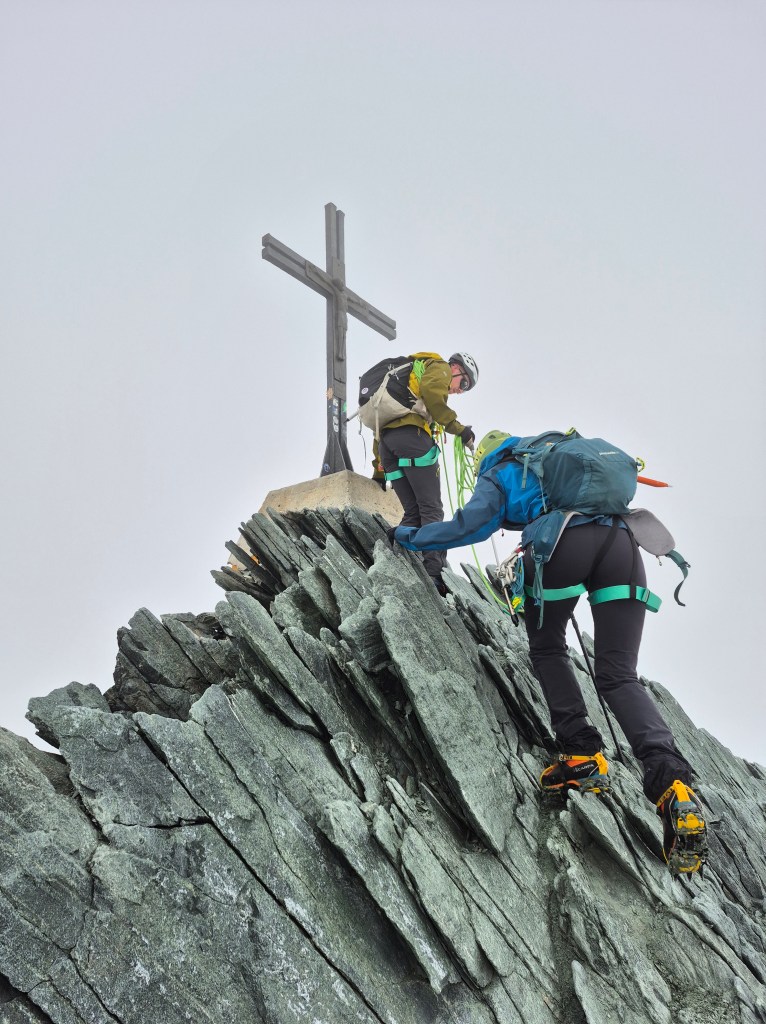
Another good question to think about is whether your goal would be better undertaken guided or unguided?
Learning under a qualified guide can super-charge your experience, and provide added safety and reassurance to your first alpine trip. While guided adventures can be expensive, the investment can be absolutely worth it if you are serious about growing your knowledge and experience in this terrain. Our recommendation, if you go down this route, would be to take the opportunity to extend your trip, following the guided section, to allow you to go out and put these skills into practice independently.
If you decide against hiring a guide, and choose to learn independently, choosing your goals wisely to allow yourself to build up would be our recommendation. Independent climbing can consolidate your skills, and often involves a lot of learning from your mistakes! This option can be great if you have the opportunity to climb with more experienced partners, who have previous experience and so can offer mentorship through your trip.
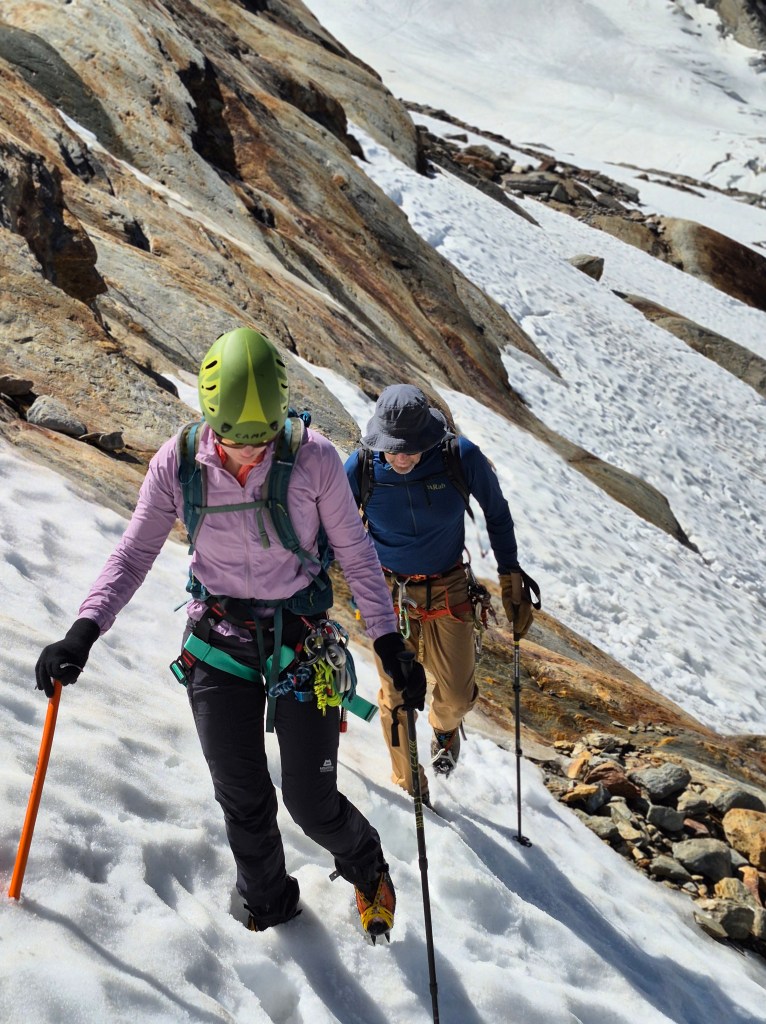
Personally, we have benefitted from a mix of both guided and unguided alpine trips. Combining specific alpine course learning with just getting out there and doing it is a great way to grow into your alpine apprenticeship. We had a great time with Chris Ensoll previously (website link below) and would highly recommend.
Location, Location, Location
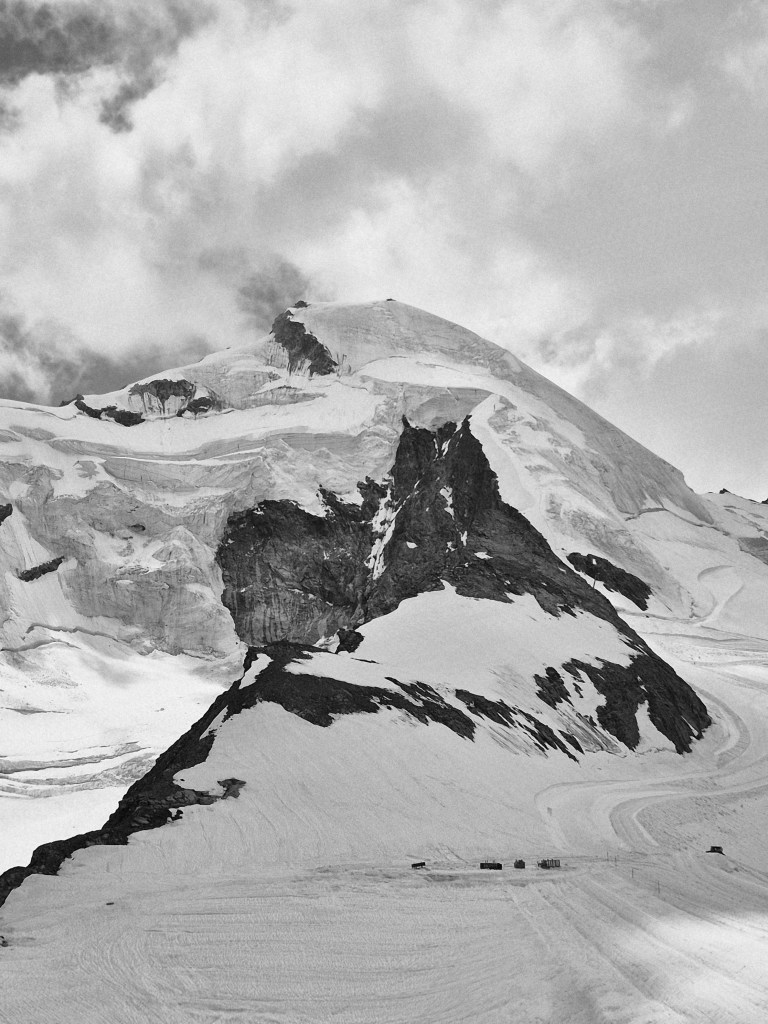
Choosing where to go for your first alpine foray can be tricky – with so many amazing places, narrowing the options down can be hard. Our recommendation would be to think about your goals, and combine this with an area that lends itself well to beginner climbers. Choosing an area that has good transport links, cable cars, lots of accommodation options (as well as inspiring mountains) can help simplify the logistics and allow you to concentrate on the new skills and experience you will be gaining. Our recommendation for first time alpinists would be the Valais Alps of Switzerland – based around Saas-Grund. This area has great cable car access to some beginner friendly (but serious) alpine peaks. There are also some great rock traverses and huts to get the full experience during your time.
A good rule to live by
It is easy to get carried away planning your first alpine trip – Jonny usually get’s carried away planning most of our trips! A good rule to live by as you start out in the alps is:
Either climb hard and short, or long and easy.
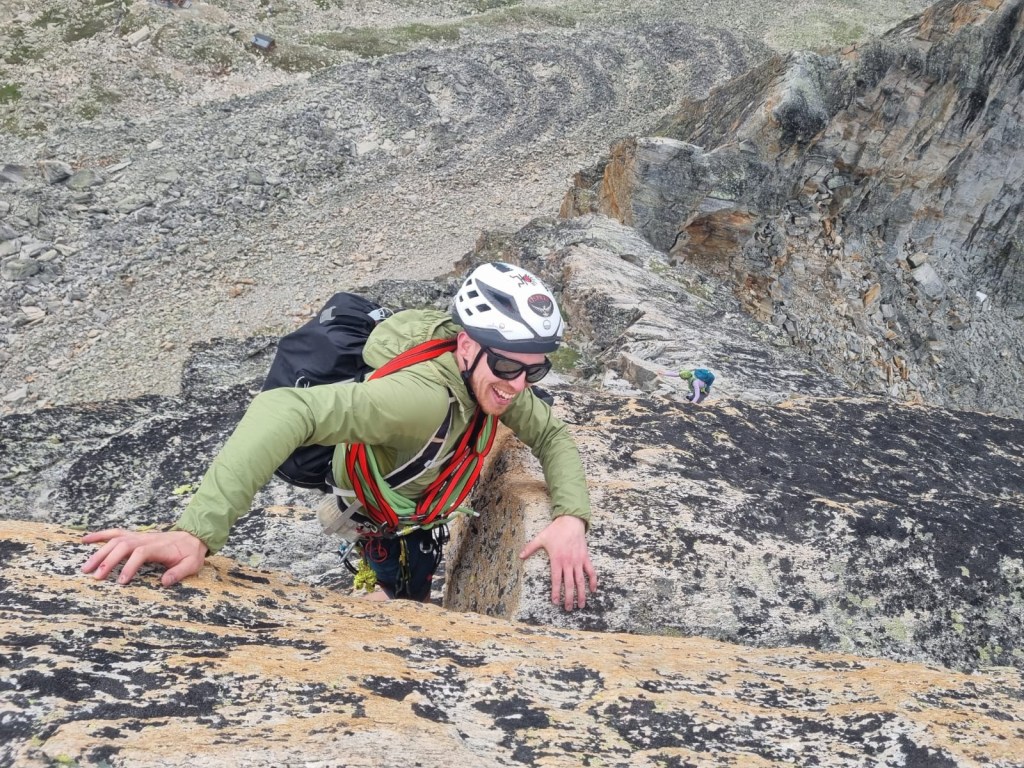
Choosing shorter, less committing technical climbs or longer easier routes is a good rule of thumb to make sure you don’t over commit and build up gradually. It is always good to put guardrails on your plans – remember, coming down in mandatory while getting to the top is optional!
Manage Expectations
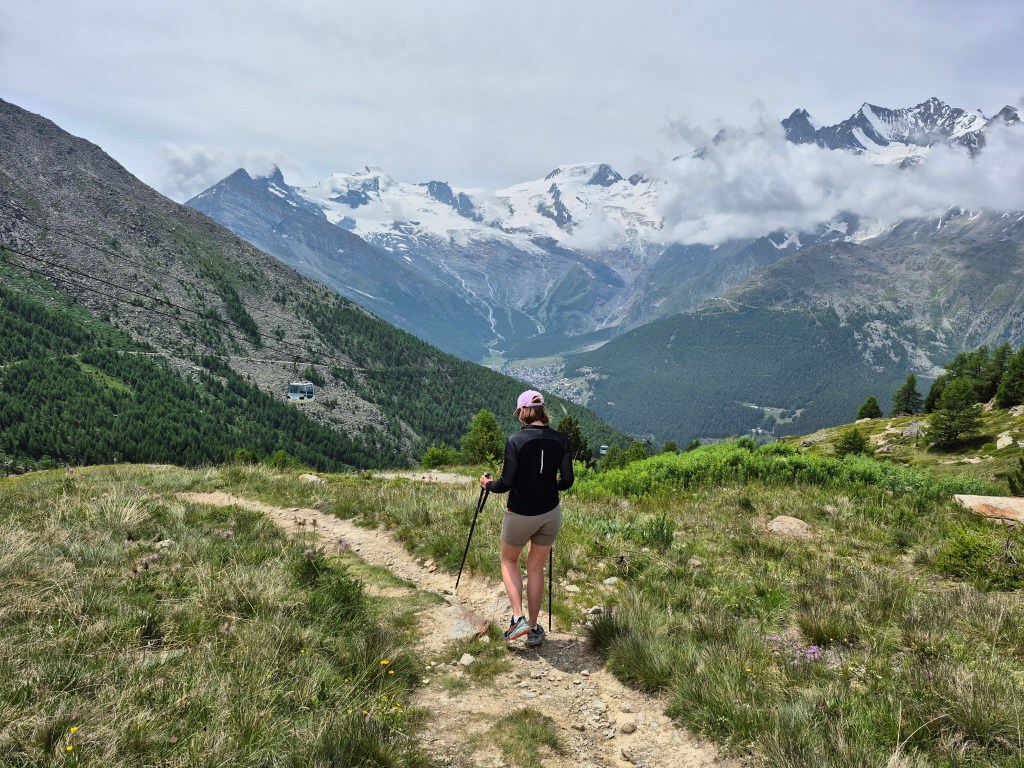
Managing expectation is always a challenge in the mountains – go with an attitude of learning, having good experiences, meeting people and spending time in the mountains. If you have this mindset, you will have a great time regardless of which particular routes you manage to tick! It is good to have loads of different back up plans for weather changes or energy levels, this way you can adapt plans as you go.
As I say, while I am still very much a ‘baby alpinist’, I hope that sharing some of the great advice others have given me has inspired and demystified the jump from climber to alpinist – happy climbing!
Recommended Links
BMC travel insurance – https://thebmc.co.uk/en/travel-insurance
Chris Ensoll Mountain Guide – https://www.chrisensoll.com/
Training for the new Alpnism – https://uphillathlete.com/product/training-for-the-new-alpinism-book/

wild.mile@outlook.com
 Wild Mile Adventure
Leave a comment