Written by Jonny and Pippa Bird

Two weeks in the Annapurna Himalaya, March 2024
The alure of the Himalayas has captured the minds of climbers for decades – those towering peaks hold the stories of daring exploration, legendary first ascents and bold self-discovery. The names Mallory, Irvine, Tenzing, Hillary have become synonymous with exploration – both of uncharted territories and of the self. ‘Brave the Himalayas and become a legend’ read the words of the vintage-style travel poster displayed in the corner of our office – as if glory is inevitably bestowed on all those who enter through its gates. Of course, there are many equally beautiful, fierce, great ranges and massifs throughout the globe – and yet – human nature always draws us to that deemed the greatest, the tallest, the most storied.
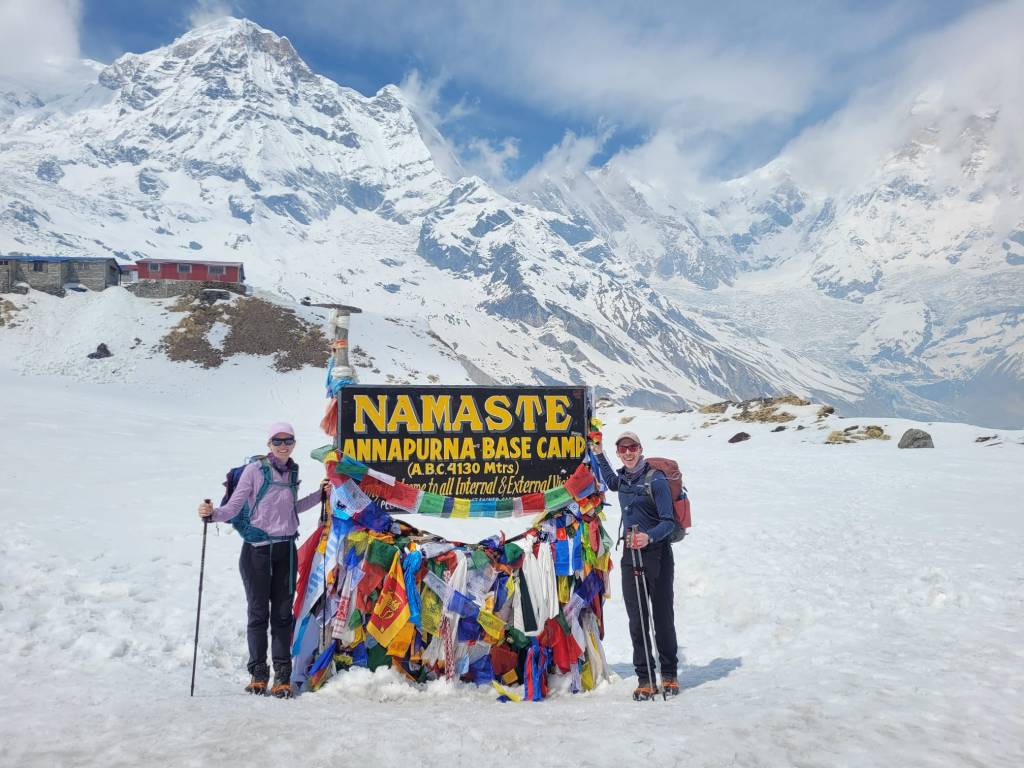
Our connection to the Annapurna region extends back to 2018, when Pippa worked an elective in neighbouring Pokhara. During this particular visit, the majority of time was spent helping provide care to patients in local hospitals, although the Himalayas were never far away – providing the perfect backdrop to inspire and set the mind dreaming. Following her elective, we both agreed that we would love to return and venture deeper into the mountains themselves. Fast forward six years and in March of 2024, we had the opportunity to join an international group hiking from Nayapul to the Annapurna South Base Camp via Ghorepani and the Annapurna Sanctuary. How could we resist?!
Our trip started, like many, on the bustling streets of Kathmandu, before taking a short flight to the more peaceful lakeside city of Pokhara. Pokhara is great place to stock up on any final supplies, enjoy some local food and prepare before the drive north into the mountains. In our case, we made the most of the time to wander down by the lake and revisit some of the places Pippa has remembered from her elective.
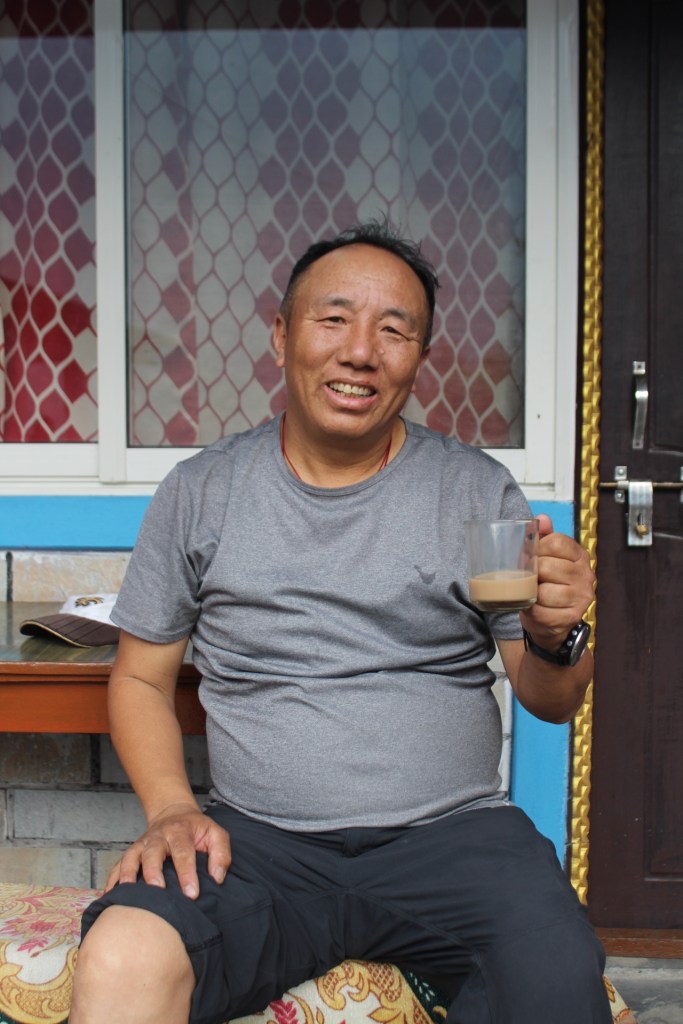
We often get questions about the benefits of travelling independently or as part of a guided group – this trip was a good example of when travelling with a local guide can open up a whole layer of history, knowledge and stories that otherwise might go unnoticed. While navigation on this particular route is straightforward, we enjoyed the added value and depth that Jangbu Sherpa and his team added, and spent a lot of evenings huddled together around the heater, sharing stories of the mountains from years gone by.

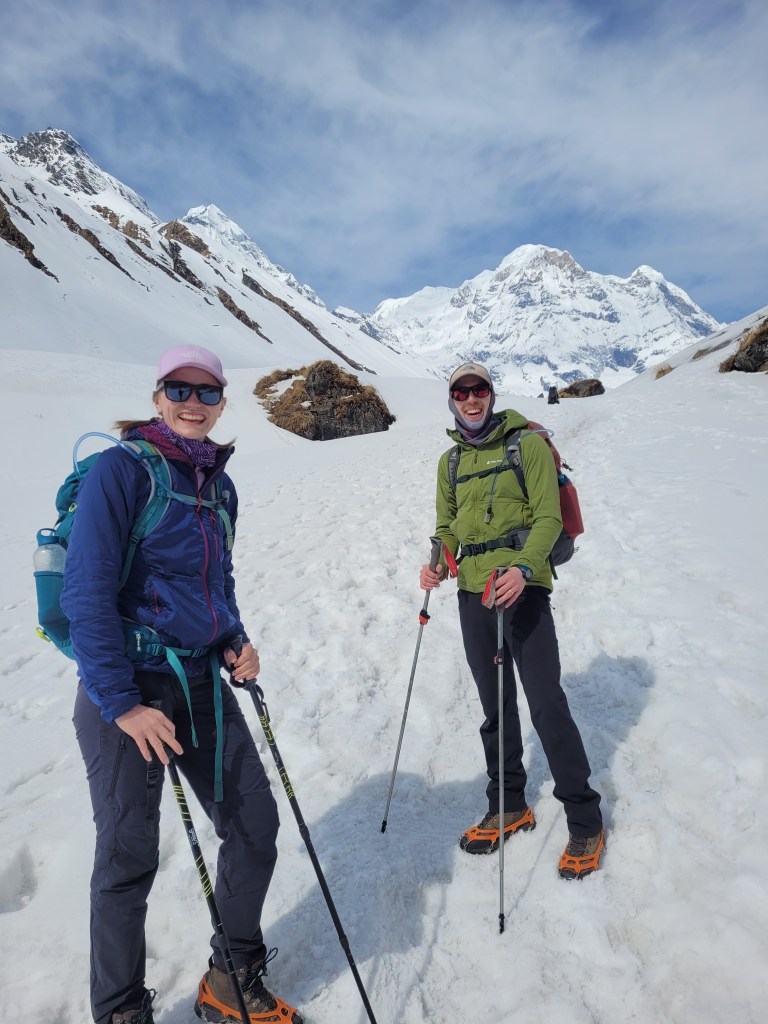
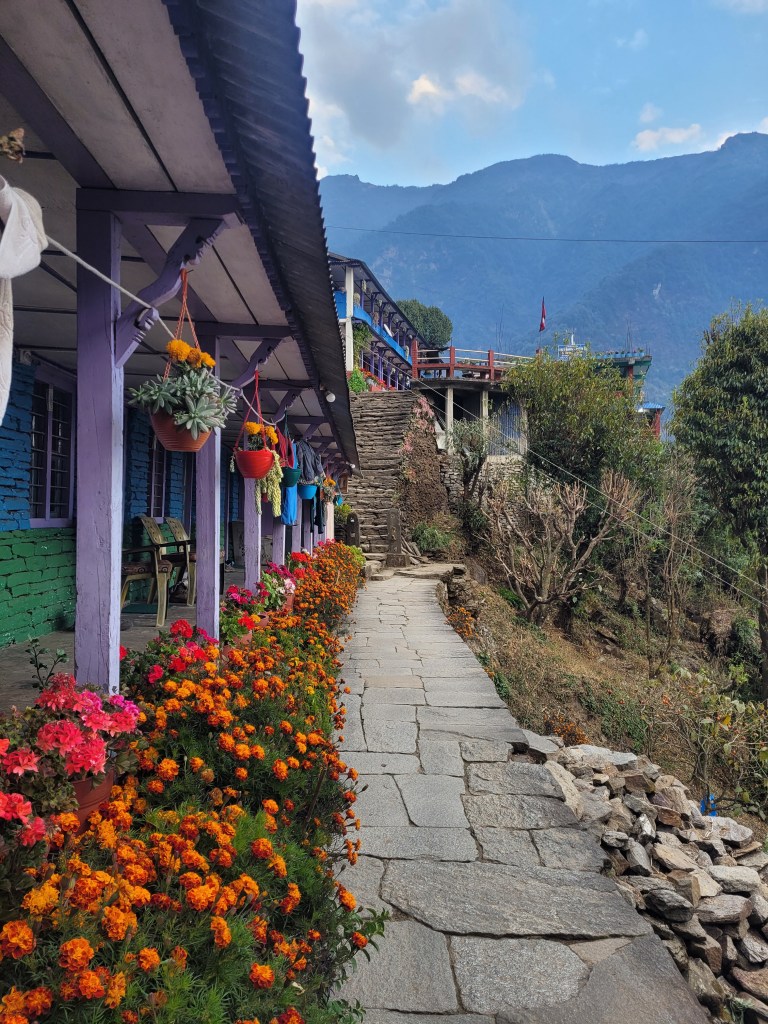
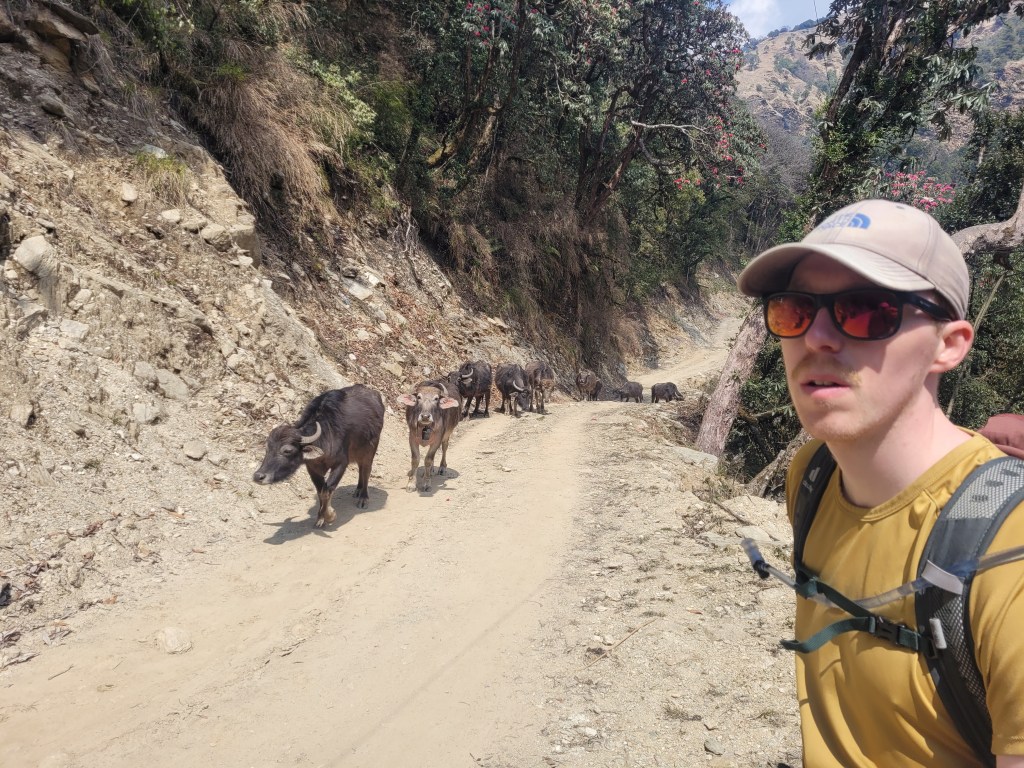
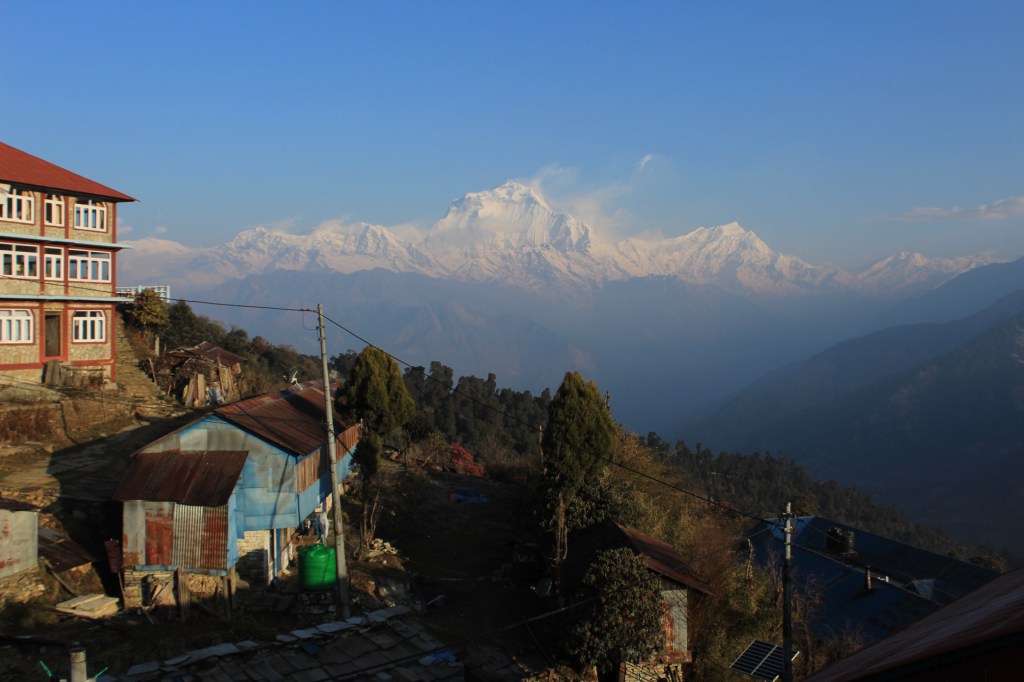
The trek itself was incredibly varied, starting off in farmed foothills, we gradually ascended into humid jungle, surrounded by towering bamboo and dense rhododendron. Butterflies, birds, monkeys caught our eye as we progressed up and down steep sets of stone steps set into the hillside, moving from village to village as we moved gradually towards our destination of the Annapurna sanctuary. Upon reaching the snowline (3500m), the environment changed again, and we found ourselves in alpine terrain, with towering white peaks and granite cliffs all around. Venturing into the sanctuary in the early season often requires the use of micro-spikes – a top tip that we heeded in Kathmandu and were grateful for after spending three days walking in snow and ice. Indeed, when arriving Annapurna South Basecamp, we were greeted with a foot of snow within a matter of hours – a true reminder of the way things can change in the mountains.
The highlight of the trip, although requiring an early start, was to witness sunrise on the face of Annapurna I (8,091m) from base camp below. It is always a wonderful thing to stand with others, in silence, and let the mountains put on a show. After 9 days of walking, we laughed that the highlight was found in 15 minutes of standing still! Inspired by the morning, we turned and headed south for a further three days towards our exit and bus back to Pokhara.
While our time in Nepal was overwhelmingly positive, it was not without challenge. Upon arriving in Kathmandu, we could both sense something was brewing – our suspicions were confirmed with several speedy trips to the bathroom! This theme continued throughout our trip, with many group members suffering from food poisoning or illness (Jonny was lucky enough to sample both)! In many ways, this is to be expected when venturing into the Himalayas, although even our local team of guides and porters suffered during our trip, showing that it was a particularly bad showing.
We left with an enormous fondness for Nepal, the Nepali people, and a mind inspired by time in the mountains. We would absolutely recommend this part of the world, and would not be surprised if we find ourselves climbing those steps, and crossing those bridges once again.
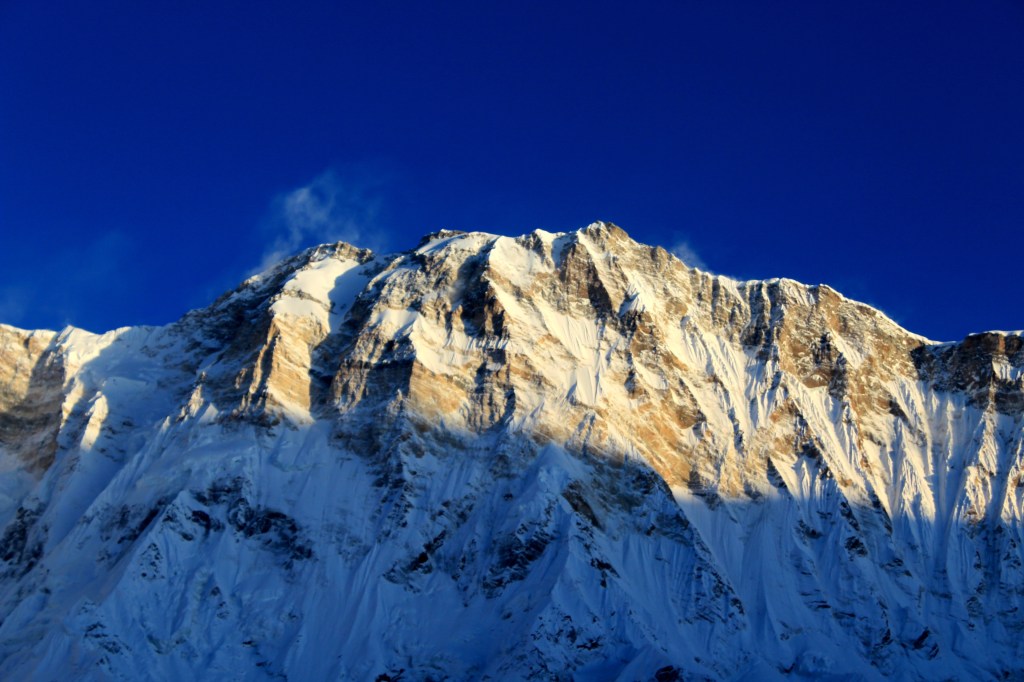
I re-trace each detail, trying to etch into my memory something of the beauty of the view before me. Below, the glacier tumbles and twists over on itself, restless as if caught in a stupor as it feeds down the valley, eager for the promise of the lush green that awaits. A small avalanche triggers to our left, spindrift spiralling above the gulley as I wait for the sound of descending snow and ice to reach us.
I look to Pippa, encouraged as her expression mirrors my own, one of awe, sensory overload, cold. We smile as the first rays of sun begin to descend on the summit of Annapurna I, shadows changing down its vast south face as the dawn awakens. The light lends itself to the mountain – suddenly the furrowed brow at its crest begins to seem more welcoming, open, as greys shift to morning orange and the distinctive alpenglow takes over.
I know my attempts to study the mountain will prove futile. Despite my efforts, the picture in front of me will fade. Vast crevasses, towering seracs, ridgelines corniced with overhanging drifts – clarity will be replaced with vagueness as they fall away and merge in my mind. But the feeling, the feeling will remain. That energy in my chest that calls out to the mountains that surround, a deep wonder, a reverence even, I am certain that this will stay with me.
Jonny: Reflections on sunrise on Annapurna I, March 2024.
When to go
Trekking in the Annapurna region is popular throughout the year, with most hikers aiming for March-May or September-November. Our top tip would be to travel early in the season when much of the area above 3500m can be snow covered. We managed to avoid the crowds by opting for the first week of the season too!
Logistics and Travel
The Annapurna region is accessed from the western Nepali city of Pokhara. In order to reach Pokhara visitors are given the choice of a short flight from Kathmandu or a 10 hour drive between the cities. Patience is often required whichever method you choose – we opted for the short 20 minute flight – although don’t be fooled, there will often be hours of waiting before boarding any planes. It is best to see this as part of the experience!
Nepal is a country that can be visited both with an organised group or as independent travellers. With only having a short two week period available, we opted to join an organised trip, run by KE Adventure (link below) which simplified the logistics and made sure we could see all we wanted to see!
Preparation and Training
As with any long distance trekking circuit, it is a good idea to be as fit and strong as you can be before travelling. With the addition of high altitude, this becomes even more essential to give yourself the best chance of being able to perform day after day.
We would recommend getting in lots of hillwalking in the months prior to the trip, along with some strength work in the gym if you have access! Focusing on longer low intensity cardio training will be a good fit for long days trekking.
When it comes to training for any expedition, our favourite go to guide is the book ‘Training for the New Alpinism: A Manual for the Climber as Athlete’ – by House and Johnston (link below) – this book outlines in great detail the training, preparation and sustaining before and during a trip.
As with any international trip it is also worth speaking with your GP/Pharmacist in advance and checking whether you require any medication or immunisations in advance of travelling.
Recommended Links
KE Adventure Travel – https://www.keadventure.com/holidays/nepal-trekking-annapurna-sanctuary
Trekking the Annapurna Himalaya – https://www.cicerone.co.uk/annapurna?srsltid=AfmBOorxVSbXZ2WjOvDNaakEZb86SPprSCbLt6viTE9bN6mCS
Training for the New Alpinism – https://uphillathlete.com/product/training-for-the-new-alpinism-book/

wild.mile@outlook.com
 Wild Mile Adventure
Leave a comment